
Fortsett til sidens hovedinnhold
Søk etter reise
Søk etter reise
Søk etter reise
Overnatting
Overnatting
Fly
Fly
Leiebiler
Leiebiler
Pakkereiser
Pakkereiser
Opplevelser
Opplevelser
Tilbud
Grupper og møter
Åpne appen
NOK
Annonser overnattingsstedet ditt
Kontakt oss
Reiser
Communication Center icon
Logg på
Som medlem sparer du minst 10 % på over 100 000 hoteller verden rundt når du er pålogget.
Logg på
Finn ut mer om Expedia Rewards
Tilbakemelding
Mexico og Mellomamerika
Biosfærisk reservat for monark-sommerfuglen
Mexico
Mexico og Mellomamerika
Planlegg reisen din
Hotell ved Biosfærisk reservat for monark-sommerfuglen
Fly til Mexico
Leiebiler i Biosfærisk reservat for monark-sommerfuglen
Ferier i Mexico
Biosfærisk reservat for monark-sommerfuglen
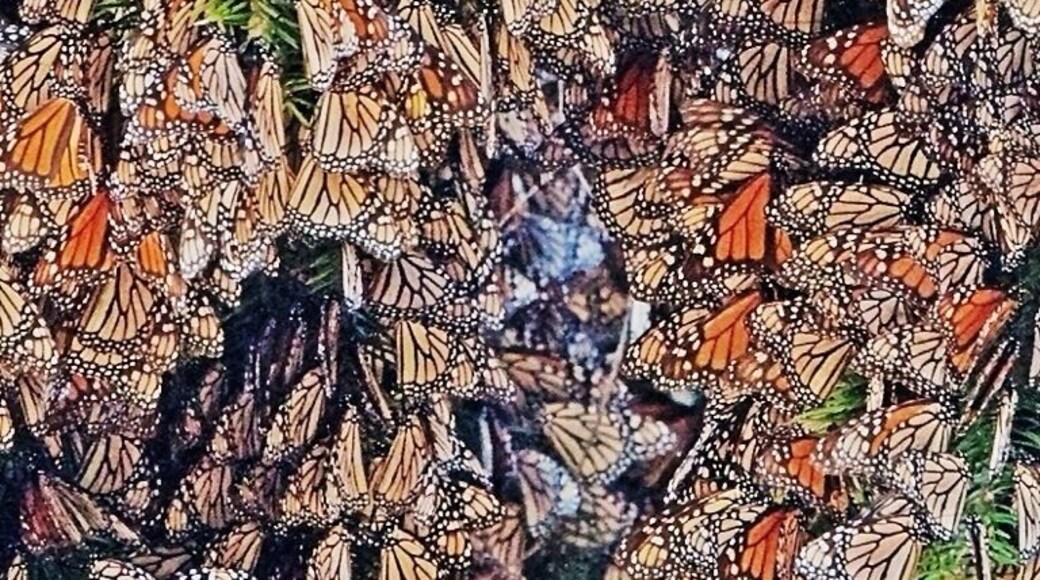
Visiting the Monarchs in Mexico is an amazing adventure. The sight of over 89 million butterflies will leave you speechless. It’s an easy 3 hour drive to walk through the forest.
It takes 1,000 butterflies to weigh one pound (.45kg), and the branches on this tree were sagging under the weight. The monarch colony here was quite different than at the more popular El Rosario sanctuary. 40 minutes outside Zitacuaro, near El Capulin, we chartered a couple of tiny mountain horses to take us up the rugged path to view the colony. The monarchs were clustered within a ravine, swirling around a few choice pine trees in search of sunny roosts. Whenever the sun went behind a cloud the butterflies scrambled into the air and back to the safety of the nucleus, knowing that settling down for the night outside the warmth of the colony would mean certain death.
Up to 1 billion monarchs winter in the mountainous pine-oak forests of central Mexico after completing one of the most spectacular migrations on Earth. From November to March they hibernate here, waking only long enough each day to sip water and gather pollen. As the weather warms they fatten up and mate. The males die quickly, but the pregnant females head north to Texas in search of a milkweed plant on which to lay their eggs. Four days later each egg hatches into a tiny caterpillar that feeds non-stop for two weeks before molting into a small cocoon-like chrysalis. Hormonal changes lead to the "birth" of the next generation of monarch, which continues the northward migration. Over the course of the spring and summer three successive generations of butterflies repeat this cycle on their northward trek. By the time the fourth generation emerges it is once again time to head south - a journey last undertaken by this generation's great-great-grandparents. The El Rosario sanctuary is open to visits, but it's a long drive from Zitacuaro and you need to get here early in the day to catch the monarchs when they are active. It also requires some steep hikes at elevations great than 10,000ft (3,000m).
Those are millions of little Monarchs clumped on the threes! Monarch Migration 🦋 Hands down one of the most special events we have had the pleasure to witness. Millions of Monarch wings fluttering to sound like a huge stream, the swarm of delicate orange overhead. Simply magical. .
5
Se alle 5 bilder
Pakkereiser
Overnatting
Fly
Leiebiler
Opplevelser
Overnatting lagt til
Fly lagt til
Leiebil
Economy
valgt
Economy
Economy
Premium Economy
Premium Economy
Business class
Business class
First class
First class
Reiser fra
Bytt om på avreise- og ankomststed
Skal til
Datoer
Reisende
Rom 1
Voksne
Reduser antallet voksne på rom 1